
Click here to return to the world ecofiction series
About the Books
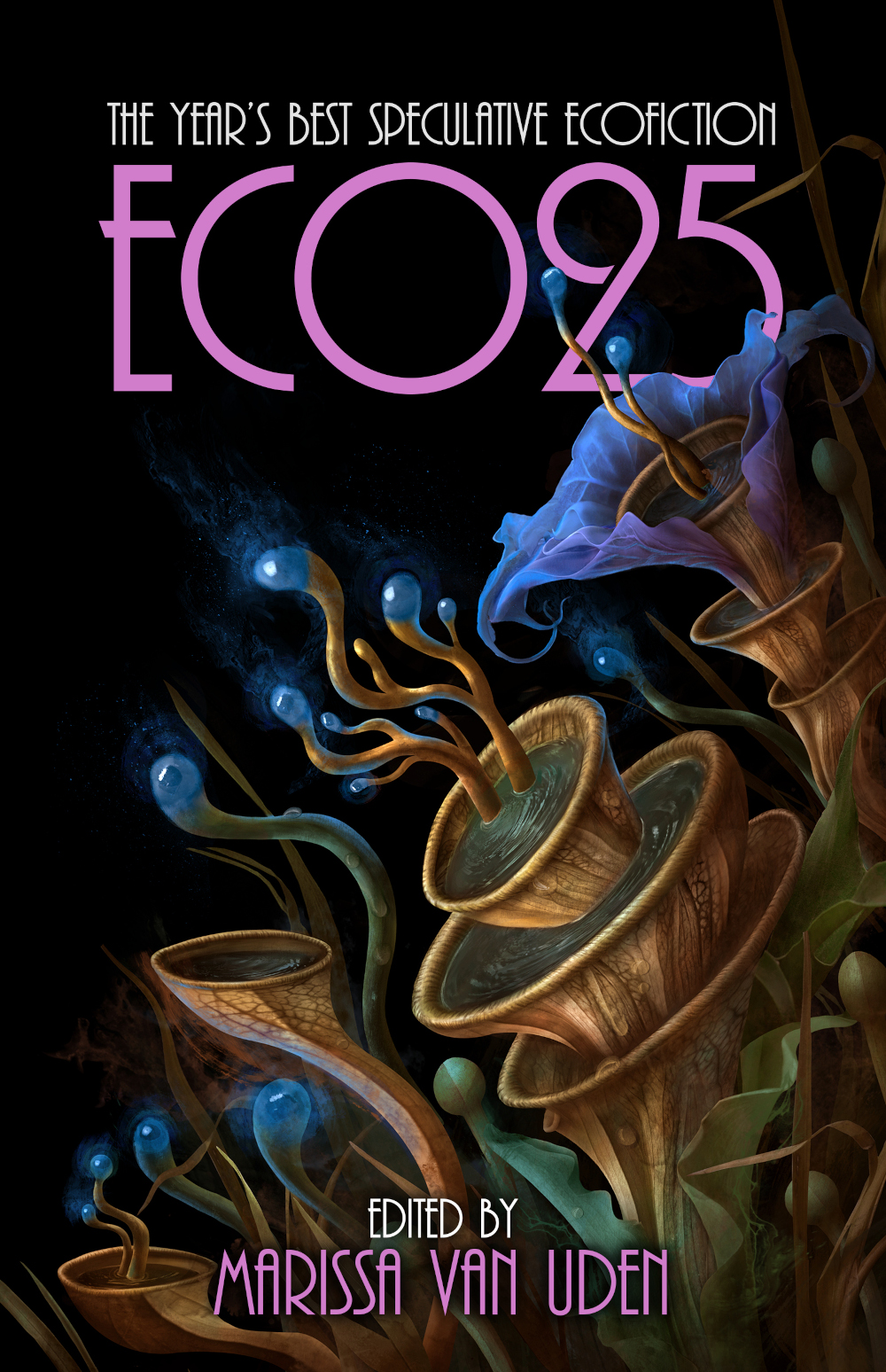
You can read more about the ECO24 and ECO25 anthologies at Violet Lichen, a new imprint of Apex Book Company. Run by Marissa van Uden, Violet Lichen publishes dark, literary, weird books and focuses on speculative ecofiction, weird and new weird, and moody science fiction with uniquely memorable characters. ECO24 came out in November 2025, and ECO25 is slated to be published in November of this year. Violet Lichen has teased the shortlist and cover reveal for the 2026 anthology.
I was thrilled to talk with Marissa, who I’ve gotten to know a little over the past couple years as a result of the Rewilding our Stories Discord.
Mary: What is your background, and how did you get involve with editing and writing?
Marissa: I grew up in Aotearoa New Zealand, where originally I pursued a career working with animals. I spent a couple years studying vet nursing and animal husbandry before I realized it wasn’t for me, and left to go backpacking around the world. That was supposed to be only for a year or two, but I fell in love with Munich and never went home.
While living there, I worked at a bar and studied natural science via Open University UK’s distance learning program. One night I wondered if I could combine my love for learning about nature with my love of reading and storytelling. I took an internship at a publisher in Berlin, and my very first project was proofreading a National Geographic science book. From that moment I was hooked, and I’ve worked in publishing ever since.
Mary: Growing up, did any authors or books inspire you to do what you’re doing today?
Marissa: A huge one for me was Richard Adam’s Watership Down. I read my copy over and over until it was tattered and worn. As a kid, I loved anything with animals in it: Black Beauty, White Fang, The Rats of NIMH. One day I picked up a creepy-looking book with a dog on the cover, Cujo by Stephen King, and that was my gateway into horror novels. Frank Herbert’s Dune was another early inspiration.
I’m also really inspired by storytelling in other mediums. I was obsessed with the film The Last Unicorn, because the idea of a creature being the last of a species haunted me. And the 1990s PC game Bladerunner was my introduction to Philip K Dick, who is now one of my all-time favorite authors. In his novel Do Androids Dream of Electric Sheep, Deckard is desperate to own a real animal because it shows a person can feel empathy, which is seen as a status symbol. It’s a theme that feels more relevant today than ever before, which is the way with a lot of PKD’s writing.
Mary: I love asking this question: what is an iconic experience you’ve had in nature that helped define you?
Marissa: So many, but one that comes to mind was discovering my love of mountains. In particular, hiking Mt. Baldy and Mt Whitney in California, and the Tongariro Crossing in New Zealand. There are not many times that I feel more me than when I’m climbing a mountain with nothing else to think about except the nature around me and my boots on the trail.
Mary: What about ecology and climate do you think can be shared well in storytelling?
Marissa: For me, the best ecology and climate stories explore our personal relationships other species and unique ecosystems. We share such a deep evolutionary connection and history with the natural world, and there’s still so much for us to recognize, new ways to communicate, so much to learn. Certain industries spend huge amounts of money on programming people to see nature as just a commodity, and to see animals as products rather than as individual someones, so they can exploit these things for profit. But through our stories, we can undo some of that indoctrination.
I also think the true scale of the climate crisis can be difficult for some people to comprehend, or the levels of suffering can be too much to process, so their brains just compartmentalize it and numb their feelings. But smaller, more personal stories fit more naturally into our brains and can break through the numbness to reach the wiser, kinder, better parts of us.
Mary: How did you get involved in Apex Books, and how did your imprint Violet Lichen evolve?
Marissa: I first started out as a volunteer slush reader for Apex Magazine, then became an associate editor and eventually began working on Apex Books. When Apex offered me my own imprint, I knew right away that I wanted to focus on ecofiction and darker, weirder speculative fiction. It been a dream come true to create Violet Lichen and make a home for strange stories about our natural world. Our first novella, The Cellar Below the Cellar by Ivy Grimes, is an absolute banger that takes inspiration from a Russian fairytale, blending it with folk mythology and unsettling quiet horror. It has a lot of subtle humor too. Ivy has such a unique voice, as we’re so honored to have published this work of hers.
Mary: Tell us about some of your past anthologies and novels.
Marissa: The Off-Season: An Anthology of Coastal New Weird was also inspired by my love of nature and weird fiction. We got tons of incredible submissions for that call and had a blast discussing the stories. I really love how the anthology turned out.
I also edited the Strange Microfiction series, which are mini anthologies of 250-word stories written to a format theme: Strange Libations are stories written as cocktail recipes, Strange Machines are user manuals written by or for robots, and Strange Locations are travel guides/reviews. They’re exclusive to the Apex Kickstarters, so are only available to buy once a year during the crowdfunding campaign.
Marissa: I also edit manuscripts as a day job and get to work with many super talented authors. Too many to name them all, but I’d love to highlight a few whose books feature characters outside of the norm, for readers looking for something different. One is Apparitions by Adam Pottle, a profound and brutally heartbreaking novel about a Deaf teen who cannot communicate, not even with sign language. The Sundowner’s Dance by Todd Keisling is a surreal horror about an elderly character, set in a retirement community. And C.S. Humble’s six-book series Amid the Vastness of All Else mixes the classic Western with vampires and the “boy adopted by a hard man” trope to create a horror series that’s full of joy, love, and so much heart. He transforms the Western genre into something truly beautiful.
Mary: Looking more closely at the Eco series, can you tell us about stories from authors around the world? How does having that diversity enrich the anthologies?
Marissa: For me, ecofiction is all about finding connection with the environment and all the life we share this Earth with, which naturally includes the humans who are a part of these ecosystems. We can’t truly understand anything if we limit our views to whatever is in our proximity, and we’d all miss out on so much. In an age where corporations are desperate to isolate people via algorithms and fearmongering in order to keep them inside their little bubble prisons—dependent on the corporations’ technology and easily controlled—it’s more important than ever to listen to voices outside of the fake walls and gain more perspective. Stories are a great way to do that.
Mary: ECO25 has been announced. Is there anything you can tell us about that?
Marissa: I’m super excited about the new volume. It has a really wide range of ecofiction subgenres and themes. We have near-future scifi, anthropomorphic prehistoric fantasy, religious climate fiction, solarpunk, eco-horror, Black resilience climate fiction, a story set in a Philip-K-Dickian anarchist society where shepherds can communicate with their sheep via dreams, a historical horror about whaling, an Aickmanesque weird fiction piece about a poet on a strange island, and so many others.
I’m very interested in keeping an open mind about ecofiction and showing all the moods and facets of how authors imagine different futures and engage with the natural world, so we don’t restrict our anthologies to any particular emotional tone like the optimistic vs. dystopian binary. Whether an author is looking directly into the darkness and expressing their authentic grief, dread or righteous fury, or exploring hopeful futures and new ways of being, we appreciate it all.
Mary: How do you find authors for your anthologies?
Marissa: For the ECO anthologies, we open to nominations from authors and editors from December through February. We also try read as much of the ecofiction published throughout the year as possible, to really get a feel for the whole field and do our best not to miss any gems. My team of readers and I read hundreds of ecofiction stories, looking for the ones that captivate us, haunt us, or are doing something fresh and unique. Then we reread and discuss our favorites to whittle the pool down to the shortlist.
Mary: What else are you working on now?
Marissa: I’m currently working on Violet Lichen’s next release, a novella called They Call the Place Wild by Rae Mariz. It’s a beautiful work of ecofiction set in Białowieża Forest, the last great old-growth forest in Europe, told through multiple narrators who reveal different perspectives on the story as it unfolds. At its heart, it explores the stories we tell ourselves, who gets to tell them, and how these narratives shape us. The novella is slated for release in early 2027.
We’re also about to open to queries, so I’ll be reading a lot of pitches in the coming months to find Violet Lichen’s next titles!
Mary:Just a note that the Rewilding Our Stories book club reading ECO24 this month. I’m also looking forward to Rae Mariz’s next novel. It sounds fascinating, and Rae is awesome. Thanks so much, Marissa!
About the Editor
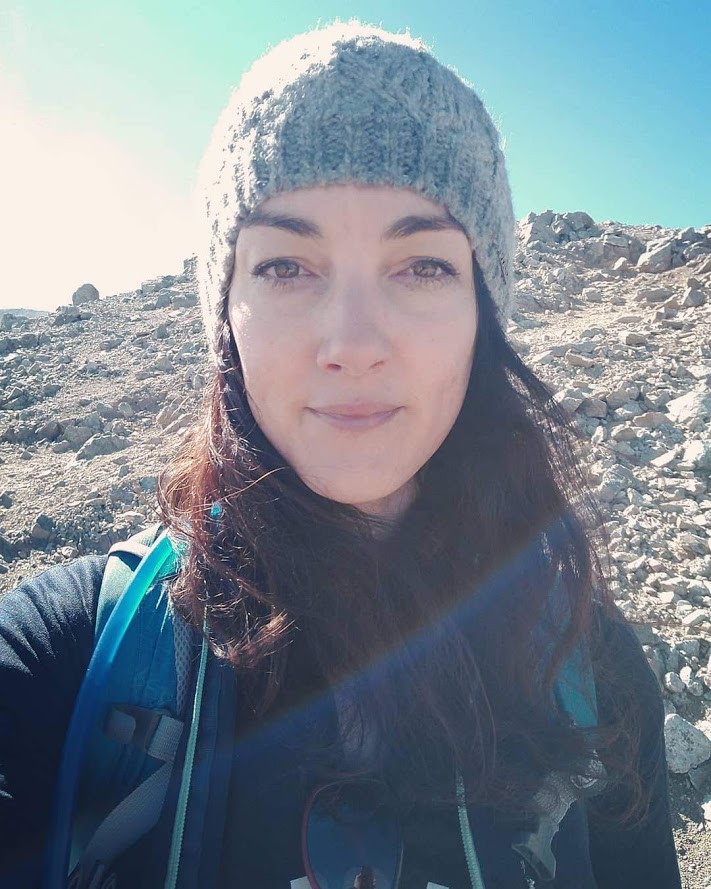
Marissa van Uden grew up in New Zealand and now lives in Vermont, in a little cabin in the woods. She loves wild things, night hikes, and eerie forests. Her anthology credits include Strange Libations, Strange Machines, Strange Locations, and The Off-Season: An Anthology of Coastal New Weird. Her short stories have appeared in Vastarian Literary Journal, Dark Matter Magazine, Zero Dark Thirty, and Los Suelos. She can sometimes be found at @marissavu.bsky.social and Instagram @marissa.vu.
Very well presented. Every quote was awesome and thanks for sharing the content. Keep sharing and keep motivating others.