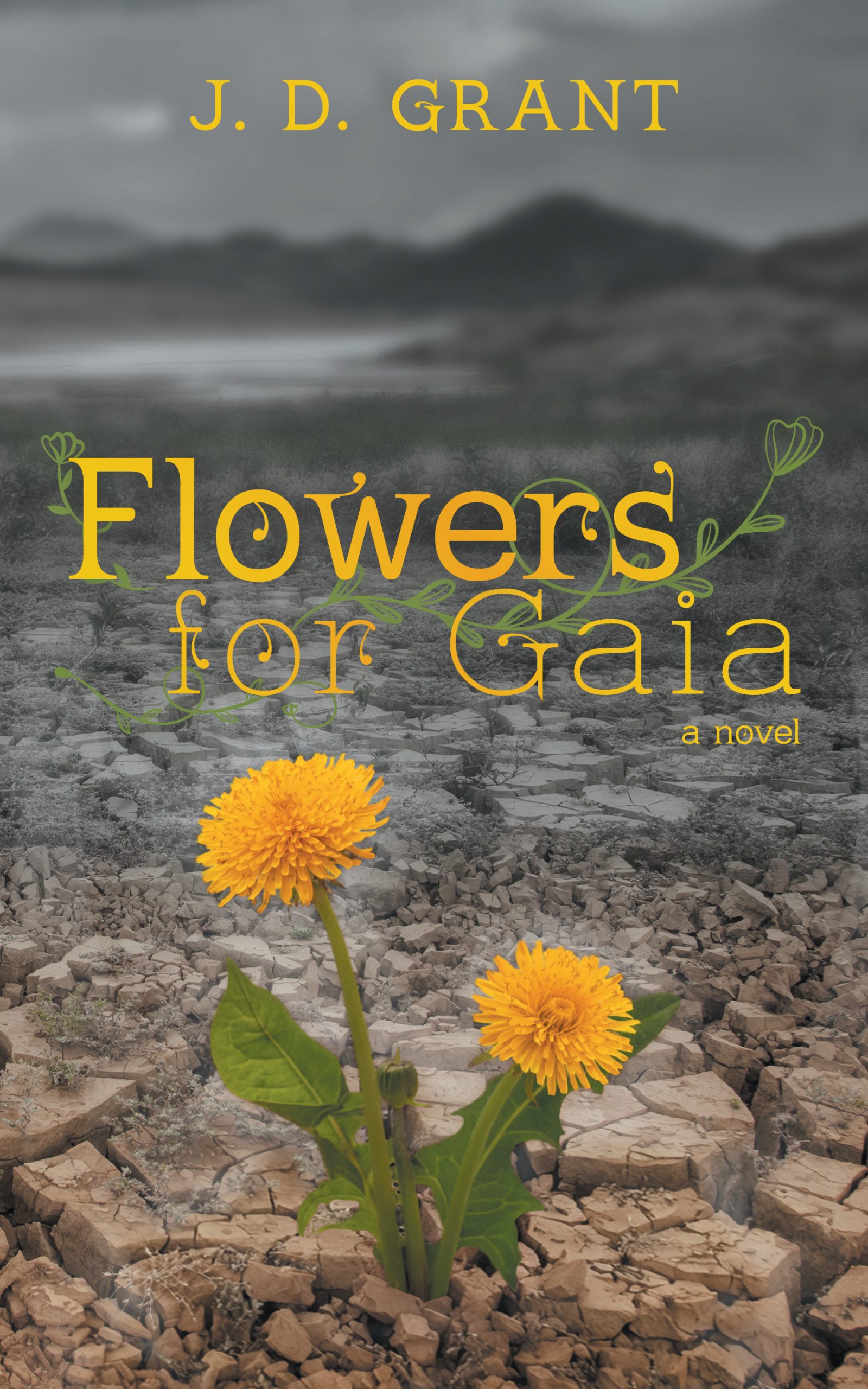
It was great to recently virtually meet some local people involved in the editing, authoring and publishing of a novel called Flowers for Gaia (by JD Grant), published by OC Publishing. Author royalties will be donated to youth programming at Ecology Action Centre (where I also volunteer), a environmental charity in Nova Scotia. Since 1971, EAC has taken leadership on critical environmental issues from biodiversity protection to climate change to environmental justice. If anyone’s interested, JD will have a book launch on Saturday, May 9, from 2:00 to 4:00 at the Cultural Federations of Nova Scotia.
Chat with JD
Mary: Tell us something about your life that not many people know about.
JD: During the years 2004 to 2008, I served as president of a small democratic free school in the heart of Wolfville, NS. Fairfield School offered an alternative education to students aged four to sixteen, giving them a much wider latitude in determining their life and educational interests than the public system allowed. We had no mandatory courses, but if a student wanted to learn art, we would recruit an art teacher. Math? Same. We had students learning Japanese from an international student studying at Acadia University. Music lessons? Check. Computer lessons? Absolutely. Interest- and enthusiasm-driven learning.
The student body worked with staff to run the school. A code of conduct and a judicial system were developed and modified by democratic vote of parents, students, and staff. Students formed various interest groups (they were called corporations and had democratically derived bylaws) that were open to all ages—computer, art, gaming, and cooking corporations. Members of these groups had regular meetings and did fundraising projects to purchase desired materials and equipment.
Sudbury Valley School in Framingham, Massachusetts, was our model. We closed in 2008 for financial reasons. Most of our students easily rejoined the public system in the grade corresponding to their age and went on to community college or university.
Mary: I love visiting Wolfville! What led you to the creative outlet of writing?
JD: From my early years, reading has been a favoured activity—many different genres, but fantasy and science fiction has always been my go-to. I have visited many different eras, worlds, and peoples. I’ve met heroes and rogues on imaginary adventures skillfully spun by talented authors.
Writers guide their readers to discover new things, places, and ideas. Speculative fiction, fantasy, and science fiction can provide unusual journeys that take place outside of the daily humdrum. Sometimes fiction is dystopic and sometimes it involves aliens or hobbits or talking animals, but the stories often deal with many of the same societal issues and problems that we all encounter in our current lives. In some of the imagined worlds, the sky is a different colour, or there are two moons, or maybe, like in my novel Flowers for Gaia, a genetic mutation gives a people mastery over elements like earth, fire, water, and air.
To tell a story that stretches reality but still captivates, entertains, and educates has long been a goal of mine. Reading has done all that for me, many times over, and I want to do that for others.
Mary: What do you do for a living, and does that contribute to your writing?
JD: Most of my almost forty-year medical career was in pediatrics, both in the office and emergency department, though in the first seven I was a general practitioner. Those many years of almost daily exposure to health issues, tragedies, and family dramas has given me an encyclopedia of experiences that I can draw on. I have interacted with thousands of different people, from many different backgrounds and ethnicities, and shared some of their joys and sorrows. So, yes, my job has given me many different blueprints upon which to draw traits for my characters.
Mary: How does your book align with nature and place?
JD: I think of Flowers for Gaia as an allegory that takes advantage of magic and science fiction to illustrate many current-day issues that need fixing. Corporate greed, unsavoury industries, climate change, wars motivated by culture or religion, bigotry, widespread pollution, and disregard for our fellow planetary creatures are just some of the everyday topics that require our attention.
We have one planet, filled with amazing plants, creatures, and natural resources, all in need of protection. Each of us can become an Earth Guardian, like the Wiconi in Flowers for Gaia, by supporting environmental organizations like Nova Scotia’s Ecology Action Centre and Greenpeace Canada. Superpowers, like the ones Calix and his friends have developed, would certainly be welcomed but aren’t required to make some positive changes. People can alter their reliance on fossil fuels, reduce plastic use, and support environmentally sustainable industries and practices.
That does not mean abandoning technology. Indeed, things like desalination, water purification, power derived from solar, wind, tidal, and geothermal systems, plus many other human inventions, all have a role to play in staying and then reversing the damage. But first, and most importantly, people need to fully accept the seriousness of our planet’s health issues and embrace a greener future.
I hadn’t heard the term “solarpunk” before (what a great word!), but I think Flowers for Gaia fits in that genre.
Mary: What’s your greatest experience in nature that somehow profoundly moves your work?
JD: This is not exactly an experience out in nature, but it is an experience with animals that has had long-lasting effects. In 2005 I had an eye-opening visit to a working dairy farm, where I learned some very uncomfortable truths. At fifteen months of age, dairy heifers are artificially impregnated. By age two and a half, they have birthed their first calves and begin producing milk. The calf is removed from the mother within forty-eight hours of birth so that the milk can be collected for human use. If the calf is male, it is most likely killed and sent to a rendering plant. Those who do survive are often sent to a veal facility. Female calves are kept as future dairy producers.
Two to three months after each calving, the mother cow is again impregnated to maintain the hormonal stimulus for milk production. Then, after about five years of almost perpetual pregnancy, they are usually culled because milk production falls and health issues arise. Left alone, these females could live for up to twenty years.
Shortly after this long afternoon of assisting with the mechanical milkers and hearing the cries of a mother as her calf was taken from her, I embraced a plant-based diet and began researching many of the industrial food production practices that contribute to the deforestation, desertification, and pollution of the earth’s air, water, and land. Then I wrote and published a few articles about these things in different medical journals.
Mary: Tell us about your new book and what inspired it, or was it accidental?
JD: I have always enjoyed YA novels—Ender’s Game, the Harry Potter series, Divergent, The Pearl, 1984, Lord of the Flies, The Giver, Silverwing, and hundreds more. All of these stories entertain, but they also carry messages. Lessons. Reflections of our world. With everything that I learned through my industrial food supply research, I wanted to write a fictional story that people could read like an adventure while being confronted with problems too often ignored in this outer realm. Magic and science fiction in a future dystopian version of earth with a young hero as the main protagonist just kind of evolved. Hopefully, I have written it well enough to give readers an immersive journey that they will remember.
Mary: Thanks so much for taking time to answer questions for the Indie Corner, and I hope your book does well!
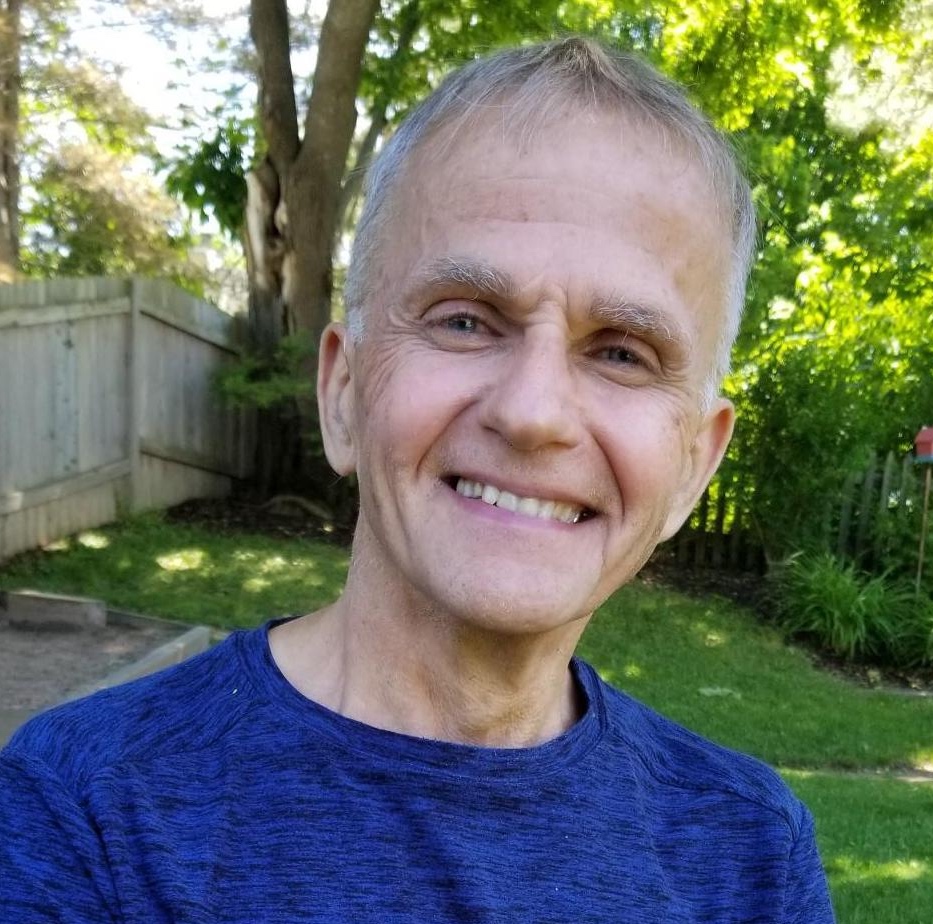
John David (JD) Grant is a lifelong fan of science fiction, fantasy, and the paranormal, be it in books, cartoons, movies, video games, or comics. A forty-year career working in health care—as a medical officer in the Canadian Air Force (Portage la Prairie, MB), a general practitioner in Cape Breton (NS), a pediatrician in both Sydney (NS) and Kentville (NS), and a pediatric emergency physician at the IWK Health Centre in Halifax—predates this second career as a writer and novelist. Flowers for Gaia is his first published novel, but others are en route.