Click here to return to the world eco-fiction series
About the Book
Forests in fiction are often understood simply as settings, symbols, or remnants of a premodern past. Yet many African novelists have turned to the forest to experiment with worldbuilding and to imagine new futures. This groundbreaking book explores the life of the forest in African fiction, showing how writers have used it to reinvent the novel’s formal, aesthetic, and political possibilities. Read more at Columbia University Press.
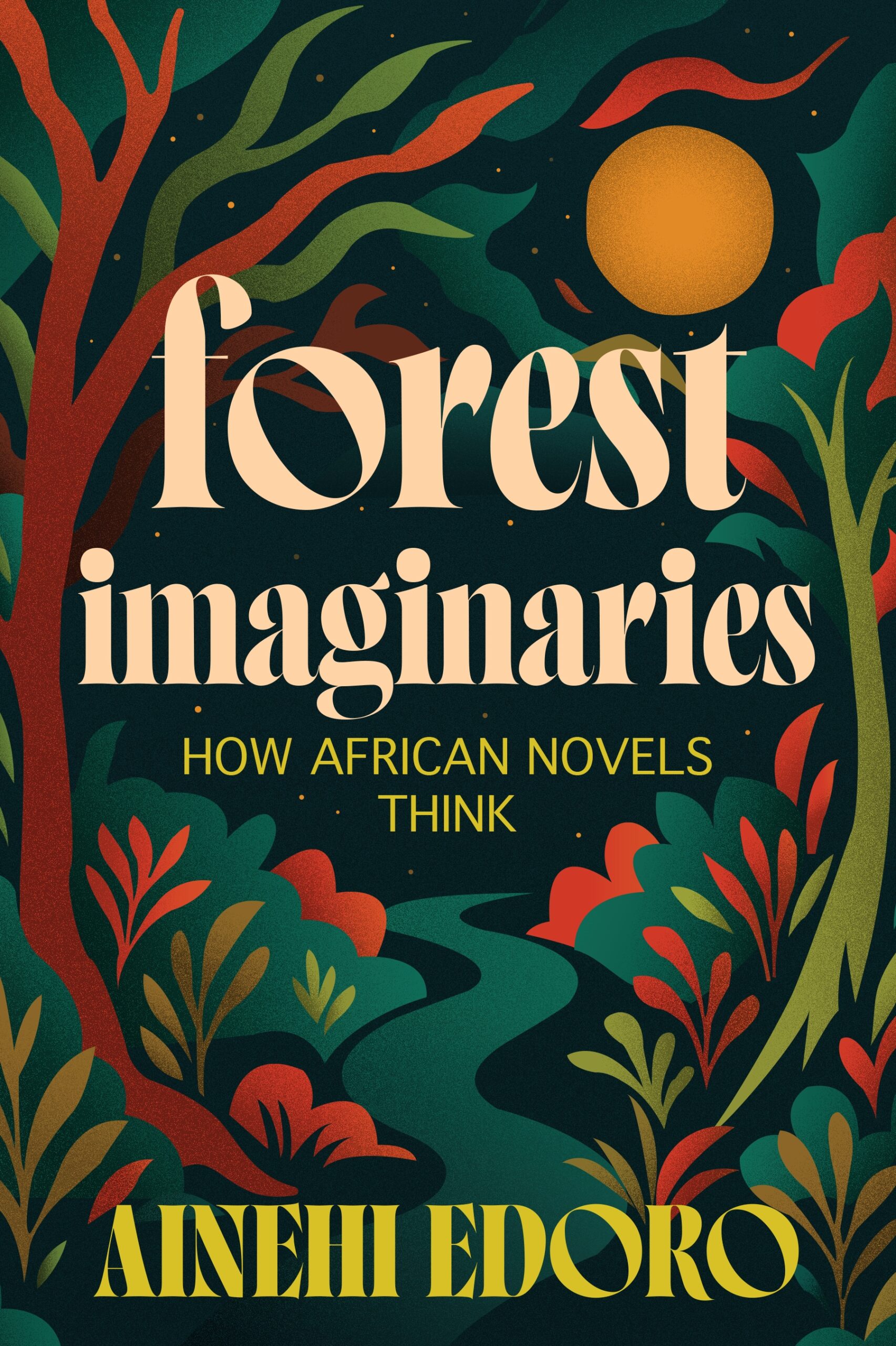
Chat with the Author
Mary: I’d like to introduce you to our readers; can you share some of your background?
Ainehi: I’m a Nigerian scholar of African literature, a teacher, and the founder of Brittle Paper, a news platform for African literary culture. Growing up, I was surrounded by storytelling and later in life became interested in how African narratives construct worlds, particularly, beyond familiar Western frameworks. That curiosity led me to study literature professionally—I am a professor at the University of Wisconsin-Madison—and to build spaces where African writing can be appreciated for its creative innovation. I am also just really excited about getting my book Forest Imaginaries out in the world.
Mary: I got excited about your book last year and preordered it. I find it fascinating, a great study on how African forests inspire authors to world-build and create. What led you to write this book?
Ainehi: First of all, thank you for buying my book! It is such a hard question to answer because, like all things forest, there were many roads and pathways that led me to write this book, too many to fully map. But what I can say is that I remember finishing one of the many versions of the manuscript and realizing that I have always been drawn to forest stories. As a child, I grew up surrounded by the many folktales that my parents shared with me and my siblings. I was also drawn to strange characters in stories—the misfits, figures who were larger than life—who did not quite fit the world around them and often had to seek out other worlds. Later, as I grew into a literary scholar, I wanted to write a book that celebrated the radical innovation African storytelling has brought to the history of the novel as a global form, and the forest came up again as the place to explore. In a way, I have always felt that African fiction is far bigger and more expansive than the frameworks inherited from the novel’s European evolution. Many scholars have hinted at this, but I wanted to say it loud and clearly that African fiction is a form with its own architecture of the world, rooted in indigenous African narrative traditions.
Mary: In the book, you point out the power of Indigenous forests, which offer literary and conceptional differences that position the forest as a repository of knowledge in African storytelling. Can you talk about how African fiction holds these concepts at heart?
Ainehi: In many Indigenous African knowledge systems, the forest is a figure of knowledge. In Yoruba thought, for instance, the forest is a threshold that connects worlds. It is a place where different forms of knowledge come together. There is also a rich tradition of forest protagonists, often hunters or diviners, who know the forest intimately. They understand its plants and animals but also its spiritual and otherworldly dimensions. Because they move between these worlds, they are also sources of insight for their communities. They draw on forms of knowledge that help people navigate uncertainty, especially in moments when familiar institutions or ways of thinking no longer offer answers. In the book, I wanted readers to see how African fiction writers bring this idea of the forest into the novel and how this helps them create worlds informed by the urgency of questioning inherited ideas and imagining new possibilities. In that sense, there is a strong impulse toward revolutionary thinking at the heart of African fiction.
Mary: Many authors place forests as a backdrop or setting, but your book examines the rich tradition of experimentation with a forest’s space and imagination. Can you talk more about that?
Ainehi: A forest is basically a writer’s invitation to experiment. It’s them asking, “What if I didn’t have to follow the rules?” Your characters can be human one moment and animal the next. Animals can speak. Time can freeze or fast-forward. Language can become strange and ritualistic. Creatures can take on wild, unexpected forms. I think that’s what draws writers to the forest as a space. And when writers use this, they’re not just saying “come enjoy a magical story.” That’s actually why I don’t think of forest stories as fantastical in the way people usually mean. I see them as writers trying to create the conditions they need to shake up the deep, familiar structures of how we live, the social rules we take for granted, so they can nudge us toward imagining something different. That’s also why it bothers me when people treat forest stories as relics of the past. I actually think forest stories have a deep futurism built into them. At their core, they’re like virtual spaces where we play around with what we don’t like about the world as it is in order to start imagining what it could be instead.
Mary: You argue that forest imaginaries cannot be realist in the sense of ruled or flat world because forests offer spaciality and other-worldliness, where an imaginary acts as a cosmic interface. Can you talk more about this expanded space, fluidity, and movement?
Ainehi: One of the cosmologies I work with in the book is Yoruba cosmology. I’ll use, as an example, the framework of the Nigerian Nobel Laureate Wole Soyinka, from his book Myth, Literature, and the African World. Soyinka describes the Yoruba cosmos as having three parts—the world of the unborn, the world of the living, and the world of the ancestors. And for the cosmos to be healthy, these worlds have to be in a relationship. Life forms can move between them, under certain ritual conditions, and sometimes one world can actually erupt into or appear within another.
Spaces like the forest are special because they are the portals or thresholds where that kind of access is possible. This means that a story set in the world of the living is never just about the world of the living. It’s always interlocked with these other worlds.
A great example is Soyinka’s play Death and the King’s Horseman. It is a historical fiction about a horseman who refuses to make the ritual journey to the other world alongside a dead king. Now, is that realism or is it fantasy? I think it’s hard to say. Because for the people of Oyo in the 1940s, the crisis at the heart of that story comes from the fact that the world of the living is always answerable to the demands of another world. That’s just how reality works in that cosmology.
Mary: You point out that African forests and African fiction are not monolithic. It’s a huge continent with all kinds of types of forests, politics, culture, and even liminal spaces. Though I am curious about commonalities, I think a more interesting question would be about the diversity itself. In multiple chapters you discuss how fiction novels are imagined through the lens of forest ecosystems and spaces. What are some of your favorite examples?
Ainehi: One of my favorite forests is in Lauren Beukes’ Zoo City. It’s a near-future, alternate-world sci-fi novel set in Johannesburg, where people who’ve committed crimes develop animal familiars that are mystically bonded to them. So the city becomes this wild meeting point of animals from everywhere, sloths, mongooses, you name it, all evolving in interesting ways to accommodate this new reality of human-animal connection.
There’s also a beautiful forest refuge in Trifonia Melibea Obono’s La Bastarda, from Equatorial Guinea. A queer community experiencing vicious homophobia in their town retreats into the forest as a free space. Then there’s a little-known novel from Liberia about two teenage girls who flee into the forest to escape forced marriage and go on this adventure that gives them a deep understanding of patriarchy. I also love forests that are easy to miss. Nnedi Okorafor’s Binti features a spaceship that is powered by a forest built right into it. And then there are forests in indigenous African epics. The Ozidi Saga, created by the Ijaw people of Nigeria, is an immersive forest world of creatures and a stage for some of the most mind-blowing battles, choreographed like a proper action movie. I could go on and on. As you can see, I’m a forest geek.
Mary: So am I! Can you talk some about literary archeology, which frames the spacial signature that reveals the political and ontological assumptions within fictional worlds?
Ainehi: Literary archaeology is a way of seeing fictional worlds for the power structures that condition them. Those structures aren’t always visible. But like archaeologists, we dig through layers to get to the foundation of how a world is built. Since we are dealing with imaginary spaces, we’re not literally digging. We are looking at how spaces in stories are organized. Which spaces connect to each other? Which are layered inside other spaces? Take Amos Tutuola’s The Palm-Wine Drinkard. It is about a hunter who travels through a forest world seeking knowledge, but that forest world is really a constellation of infinite mini-worlds, each one holding other worlds inside itself. A novel like Chinua Achebe’s Things Fall Apart works a little differently. It is slightly less disorienting but just as rich. The evil forest operates as a kind of juridical device. It shows up in bodies, in decisions about who lives or dies; it gives form to the household and the clan. But it’s also entangled with colonial spaces like the prison and the church. So when we are doing literary archaeology, we’re not asking “what does the evil forest mean?” We’re asking: what other spaces and power structures does it pull into view that we would never notice otherwise? That’s really what reading for power is. Fictional worlds are never built from nothing. There’s ideology, politics, assumptions about who is disposable, who gets included or excluded baked into the fictional world. Storytelling is a system with rules, about what characters can do, where, and how. Literary archaeology asks how those narrative conventions intersect with the deeper politics of the fictional world, and what possibilities they open up or close off for the people living inside it.
Mary: Onto a lighter subject, do you have any favorite novels imagined by forests? And are you working on anything else right now?
Oh, this is the fun part. I could go on forever, but a few that stay with me: Thomas Mofolo’s Chaka drafted in 1908 and published in 1925 is this dark, relentless world of pure political power and ambition. The forest surfaces again and again as this surreptitious force, reminding us of the dangers of power when it is obsessed with its own scale. Haunting! Tutuola, for me, deserves the title of the greatest modern storyteller of the forest. Everything he wrote. The sheer number of ways he pulls you into these meticulously crafted forest worlds. The man was a genius! Chikodili Emelumadu’s Dazzling (2023) is a boarding school story where the forest near the school is a portal for otherworldly beings. And I love that it centers a powerful girl character. That combination: the forest as threshold and a girl as the one who saves the cosmos from being broken along its seams is the kind of thing I love. I’d also add Coetzee’s Dusklands (1974). There’s a story in it partly about the Vietnam War where the forest is this abstract figure of power used to justify the dehumanization of life. It’s a very different kind of forest but just as politically charged.
Ainehi: As for what I’m working on? The book came out a month ago, so I’m still working on convincing more people that forests are the most exciting places in literature. Lol.
Mary: I’m so fascinated by this book, and I hope it goes far. Thanks so much, Ainehi!
Author Bio
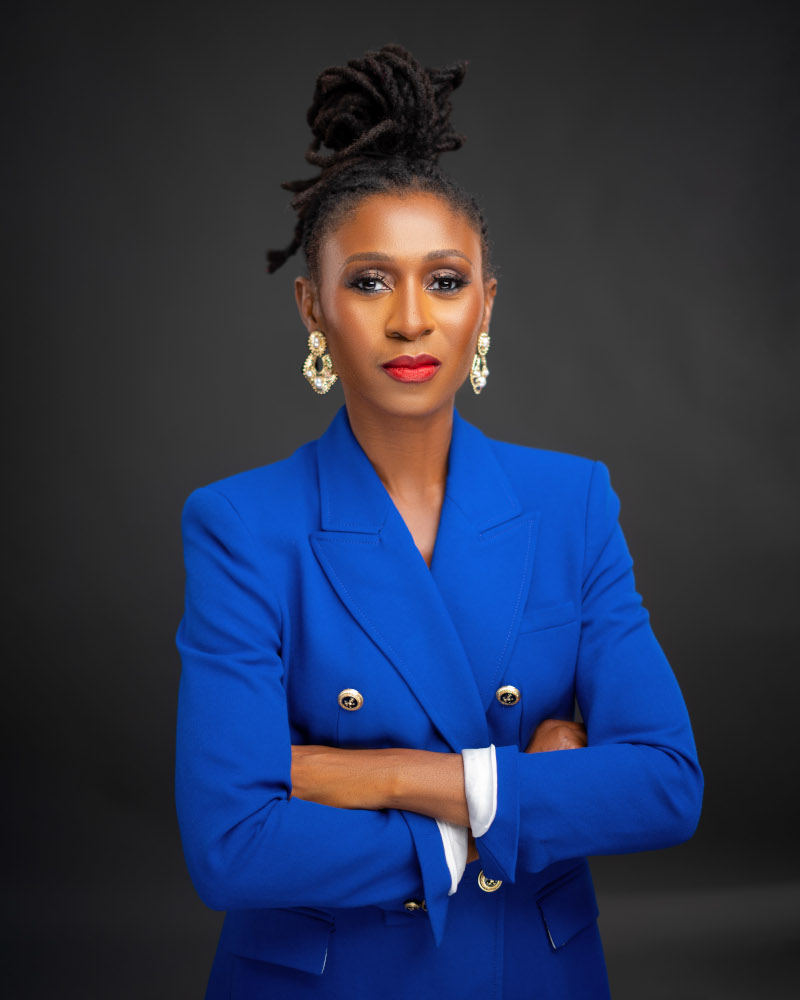
Ainehi Edoro-Glines is a Nigerian literary scholar who studies African literature and digital culture. She is a Mellon Morgridge Assistant Professor of English and African Cultural Studies at the University of Wisconsin–Madison. She is the founder and editor of Brittle Paper, a major news platform on African books and literary culture. Her research explores how stories, in novels and on social media, present new ways of thinking about the art and philosophy of worldmaking. Her first book Forest Imaginaries: How African Novels Think was published by Columbia University Press in January 2026. Her recent publications include “Unruly Archives: Literary Form and the Social Media Imaginary” (ELH, 2022) and “Mediated Ancestrality: Mariama Bâ, Instagram, and the Poetics of Fragmentation” (PMLA, 2025), and “African Literary Culture and the Archival Stakes of Social Media” (Journal of Global Postcolonial Studies, 2025). Her work has also appeared in mainstream platforms like The Guardian, Africa is a Country, Lit Hub, BBC World News, and SABC. Dr. Edoro is an Okay Africa and New Africa Magazine top 100 honoree.